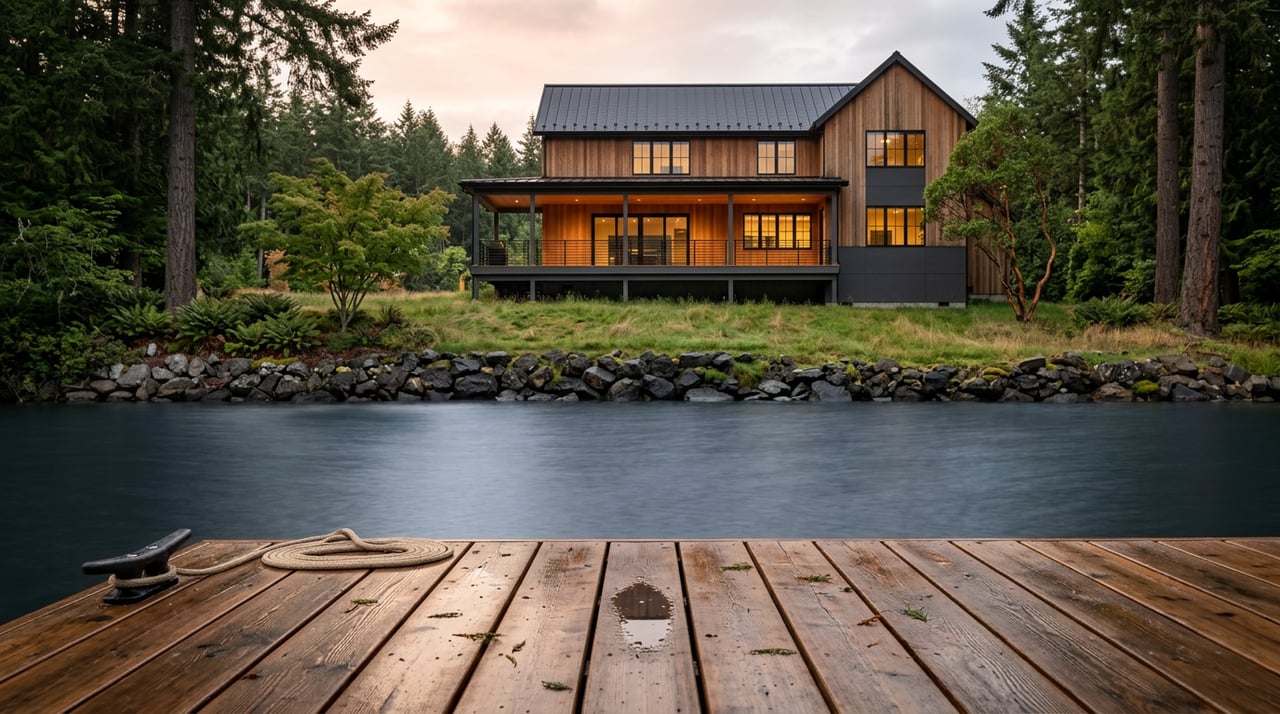
The boat ramp at Bloedel Donovan is a different place at 5:47 a.m. than it is at noon. In past Julys, a resident with a kayak on the roof could roll down Electric Avenue before the seasonal staff arrived, unload at the ramp, and be on flat water before the first paddleboarder woke up. That informal window is gone. This summer, if the ramp gate is down and staff are off shift, you call a hotline for a remote inspection before your hull touches the lake.
That single operational change is the story of summer 2026 on Lake Whatcom, and almost every other rhythm on the water bends around it.
The Gate At Bloedel Donovan Is New, And It Matters Every Morning
The Lake Whatcom Management Program broke ground last summer on automated Aquatic Invasive Species check-station gates at the Bloedel Donovan Park boat launch that prevent uninspected boats from entering Lake Whatcom during hours when seasonal AIS staff are not working, with anyone launching during those times calling a hotline to perform a remote inspection. The staffed season this year runs from April 25 through October 10, 2026, dawn to dusk, seven days a week during that window. Outside those hours, and outside those months, the phone does the work: the AIS Program hotline at (360) 778-7975.
The reason for the gate is not paperwork. The project is a step in ongoing efforts to protect the drinking water source from invasive species as visitation to local lakes grows and AIS detections occur closer to Whatcom County. Lake Whatcom is the tap water for roughly 100,000 people downstream, and the county's tolerance for a zebra or quagga mussel arriving on a trailer is functionally zero. Fee structures reinforce that: permit rates vary depending on where the boat is stored, because boats visiting Whatcom County lakes from further away pose a greater risk of introducing invasive species, and that risk is reflected in the price. Whatcom-stored boats pay less than Washington-stored boats, which pay less than out-of-state ones.
For a resident who launches the same aluminum skiff every Saturday, none of that changes the season. For a resident whose habit was a quiet 5 a.m. paddle before the ramp got busy, the phone call is the new habit.
Your Kayak Counts. Your Canoe Counts. The Neighbor's Inflatable Might Not.
The most misread rule on the lake is not about wake boats. It is about the plastic sit-on-top hanging in the garage.
Inspections are required for all watercraft operating on Lake Whatcom and Lake Samish under BMC 12.12.280 and WCC 2.27A, including non-motorized, hand-carried watercraft such as canoes and kayaks, and prior to launching and while operating on both lakes, all watercraft must display a valid aquatic invasive species permit. The permit lives on the hull, not in your glove box.
The one meaningful exception is worth reading carefully. Permit fees are not required for surfboards, paddle boards, e-foils, and kite boards of any size, or for float tubes and water sport toys, or for non-motorized inflatables of a certain size. A hard-shell kayak is a permit. A blow-up flamingo is not. A stand-up paddleboard sits on the free side of that line, which is why the SUP crowd has quietly become the fastest-growing user group at the swim docks.
A useful discount lives on the same website that sells the permit. Taking the AIS Awareness Course knocks $10 off the annual permit and teaches ways to prevent the spread of invasive species. Ten minutes for ten dollars is the highest-return decision on the lake this summer.
The Weekly Rhythm At The Ramp
Bloedel Donovan is not just a launch. It is a community program schedule with a lake attached. Whatcom Wake Sports runs the ramp on a weekly cadence that shapes when the water is loud and when it is quiet:
| Evening | Program | Notes |
|---|---|---|
| Tuesday | Grom's Night | Youth wake surfing and wakeboarding, 6 p.m. start |
| Thursday | Couples Night | 6 to 9 p.m., every week through September 24, 2026, geared toward couples who love to be active in the clean waters of Lake Whatcom |
| Monday | Men's Night | Wake surf and wakeboard, various times |
If you live on the west side of Silver Beach or the near end of North Shore Drive, Tuesday and Thursday evenings are when the wake sets travel farthest. If you paddle, mid-morning on Wednesday or Friday is your window.
The swim side of the park has its own quiet upgrade this year. The swim docks at Bloedel Donovan Park were installed with help from the Bellingham Bay Rotary, which is a small civic detail that changes the feel of the swim area for families who used to wade out to nothing.
The Triathlon Weekend Is A Traffic Event, Not Just A Race
On Saturday, July 11, the Lake Whatcom Triathlon staged the entire race out of Bloedel Donovan Park. The Olympic course is worth understanding as a resident even if you never intend to swim a meter of it, because it uses the roads you drive.
The Olympic distance begins with a 1,500-meter clockwise swim loop in Lake Whatcom that starts on the beach and exits via the park boat ramp, then a 40km bike course sends riders on an out-and-back along North Shore Road combined with a climbing loop inland through the rolling hills of Y Road, and the race finishes with a 10km run contested mostly on crushed gravel paths along the Railroad Trail and through the forested terrain of Whatcom Falls Park. North Shore Drive was closed to residents' usual pace for the morning. If you missed it this year, mark the second Saturday of next July before anyone asks you to host brunch.
The Drive Around The Lake Is Not A Loop
This is the geography detail that catches every first-year guest and, more surprisingly, a lot of longtime residents who never actually needed to drive it.
Lake Whatcom Boulevard does not circle Lake Whatcom. It runs the west shore from Silver Beach south past Sudden Valley toward Y Road, and the eastern shore is reached only by looping through the county road network. The lake sits in three basins, with Basin 3, where Sudden Valley is situated, being the largest and deepest. Basin 1, the north end, is the drinking water intake. Basin 2 is the middle. That geometry is why the water quality conversation always centers on the southern basin and the density of homes ringing it.
For a Sunday drive with out-of-town guests, the route that actually works is Silver Beach down through Geneva, past the Sudden Valley entrance, out to the southern turnaround, and back the way you came. The eastern shore that looks so close on the map is a real errand, not a scenic detour.
Where The Shore Refuels
The lake has two anchor stops for a resident who does not want to drive back into town.
Inside Sudden Valley, the community's own Market & Café is the meeting place most Fridays and most Saturday mornings. Sudden Valley itself is a scale most people underestimate. As Julian Friedman, born and raised in Bellingham, has described it, the community started as a vacation development for Canadian buyers, and as Bellingham became less affordable, most of the cabins were converted into year-round dwellings. Today it holds more than 3,000 homes, which makes it one of the largest HOA-managed communities in the state. That density is the reason the Market & Café functions like a small-town general store rather than an amenity.
The marina side is member-oriented. Sudden Valley Marina at Gate 1, 20 Marina Drive, is a private marina for member and resident use only, with AIS inspections available by appointment. If you keep a boat there and haven't scheduled your inspection for the year, that phone call is overdue.
Beyond the developed shore, the walking is where residents actually spend the most hours. The Stimpson Family Nature Reserve and the Lookout Mountain Forest Preserve sit within easy reach of Sudden Valley. Lookout Mountain in particular is more than 4,000 acres of land where you can walk for hours and hours through second-growth forest. Add the ongoing forest management planning effort covering more than 13,000 acres of publicly owned forest in the Lake Whatcom watershed, and the trail network is only getting more intentional.
The Small Things To Do Before August
Three items that reward a resident's attention this month:
- Check the permit sticker on every hull in the garage. The 2026 sticker is required whether the boat sees the water or not, if you launch or operate on the lake. A permit lapse is the fastest way to lose a Saturday.
- Save the hotline in your phone. 360-778-7975 is a five-second contact entry that turns an off-hours launch from a problem into a phone call.
- Watch the shoreline for algae. Toxic algae blooms are caused by blue-green algae called cyanobacteria, and the blooms often look like blue-green paint spilled on the surface of the water. If you see it, keep dogs out and report it to the county at 360-778-6000. The county responds to reports rather than routinely testing freshwater lakes, so residents are the eyes on the water.
None of this is dramatic. That is the point. The lake most residents chose is the same lake it was last summer, with a slightly more deliberate way of getting on it. The gate, the permit, the hotline, the weekly cadence at the ramp: absorb them once, and the rest of the summer runs on the same quiet rhythm the shore has always kept.
If you are curious how a home on this lake trades hands, or you want a specific read on the differences between a Basin 3 waterfront and a Geneva lot with lake access, Julian & Company knows this shoreline block by block. Get your free home valuation and start the conversation.