Marijo Martini learned silversmithing to make her own wedding band. Years later she opened Martini Mercantile in an old house at 2100 Iron St., with a jewelry studio in the back room and a shop out front. Cascadia Daily News called it an "artisan corner store." She told the paper she wanted to show off friends' work. "I think about all the friends that I have, and how much wonderful art they make," Martini said. She also said she hoped people would stroll over after brunch at a nearby café. The shop's website still describes it as her jewelry studio and neighborhood boutique in Sunnyland.
Bellingham's home-business code took effect on Nov. 3, and it moves the city toward that kind of storefront, with one limit. Under the new rules, a Sunnyland garage or backyard building can become a small studio that sells what is made there. It still cannot serve coffee. The next shops to appear on residential streets here will look more like Martini Mercantile than like a corner café.
What actually changed on November 3
City Council passed Ordinance 2026-10-030 by a 7–0 vote on Oct. 19. The City's housing and development rule updates page says the rules took effect Nov. 3, 2026. The October staff memo describes how much the old code allowed, which is a useful baseline.
| Before Nov. 3 | Since Nov. 3 | |
|---|---|---|
| Where the business can operate | Inside the house only | The house and/or an accessory building on the same lot |
| Employees besides the resident | One | Up to three |
| Retail sales | None | Goods made on site, or goods sold with a service |
| Exterior changes for the business | Not allowed | Structural enlargements allowed for the business |
The new code also sets a size limit. A home business can use up to 500 square feet, more only with a discretionary permit, and never more than half of the home's gross floor area.
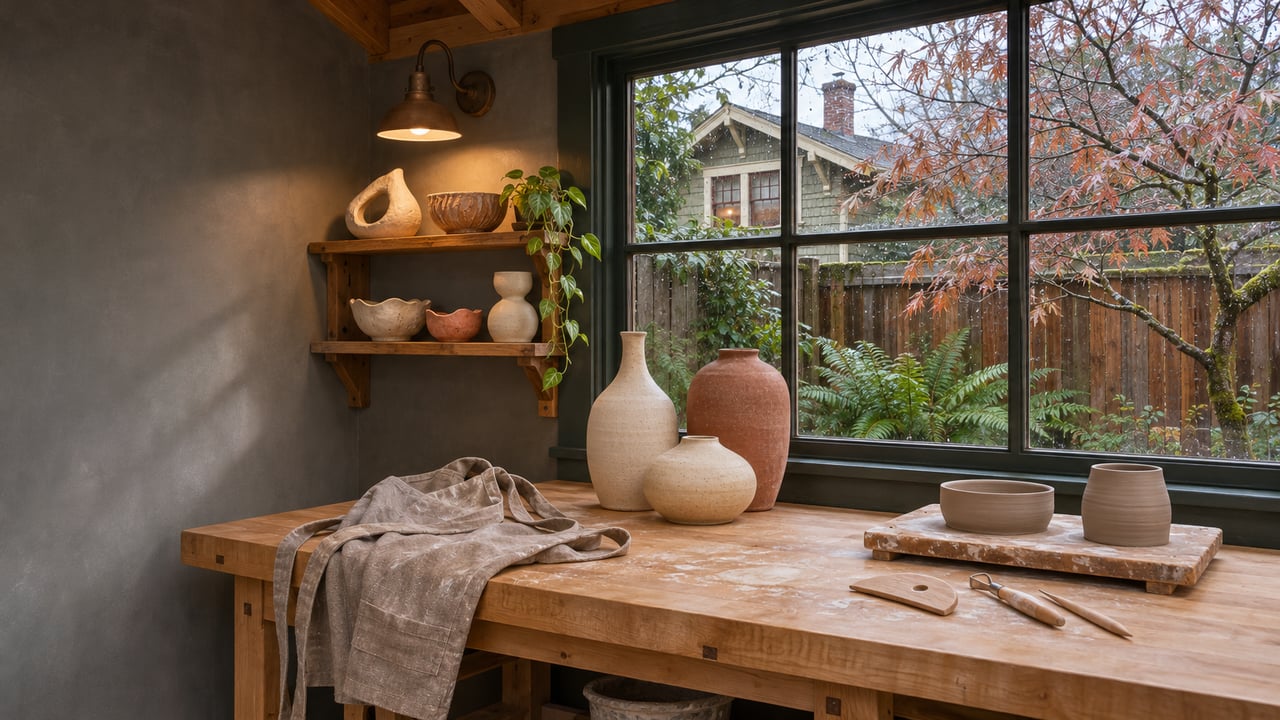
The biggest change is retail. Before Nov. 3, a ceramicist working out of a Sunnyland basement could make pots there but could not sell them there. Now the ordinance lists "retail sales of handicraft goods made on the premises such as jewelry, ceramics, paper and fiber arts, and photography" as an allowed use.
These changes follow requests the City was already getting. Staff said that over several months, unprompted inquiries from prospective business owners kept describing plans that used accessory buildings, retail sales or both. Before the public hearing, KISM/MyBellinghamNow reported that more than half of residents surveyed for the Comprehensive Plan favored more home businesses.
Three tiers, sorted by how much the block will notice
The ordinance text sorts home businesses by their likely effect on the street around them.
- Class A, no permit. Bookkeeping, an office for a business run somewhere else, or any work with no visible sign of the business and no customers or employees coming to the house. A state-licensed family child care home caring for up to 12 children also falls here.
- Class B, administrative Type I permit. Massage, salon, physical therapy and chiropractic services. Counseling, legal and financial-planning offices. Household repair shops. Fitness, music, art and tutoring classes. Sales of handmade goods made on site, and of goods sold along with a service.
- Class C, discretionary Type II permit. Anything over 500 square feet, plus woodworking, welding, machining, and cooking or baking food that is eaten somewhere else. These require an operations plan covering deliveries, stored materials, equipment, and how noise, smell and light will be controlled. Hours are weekdays from 8 a.m. to 5 p.m. unless the planning director sets different ones.
A neighbor would see a Class C business before it opened. Those permits require public notice to property owners within 100 feet, and the planning director can add conditions to protect the neighborhood. Class B permits go through an administrative decision.
So a Sunnyland neighbor who wants to bake bread for a weekend market needs a permit that involves the people next door. A neighbor who teaches piano or sells ceramics from a converted garage does not.
The line the ordinance did not move
The prohibited list did not change for the use most likely to come to mind. Eating and drinking establishments are still barred from home businesses, along with veterinary clinics, hospitals, mortuaries, auto repair, stables, kennels and fleet dispatch centers. Retail sales of goods that are neither made on site nor sold with a service are also barred. A backyard studio can sell its own mugs. It cannot fill them with coffee, and it cannot stock snacks someone else made.
The City calls these rules a first step. Its rule updates page describes them as the beginning of a possible expansion of small-scale commercial uses in neighborhoods, which could arrive as early as 2027. That direction comes from the top. On June 15, 2026, Mayor Kim Lund signed an executive order whose Action 1D calls for policies "enabling home-based businesses, neighborhood serving retail, and corner-store uses that encourage entrepreneurship, walkability, and economic life close to home."
State legislation could also force the next step. House Bill 1175 would have required cities to allow neighborhood stores and cafés in any residential zone. It did not pass the Washington State Senate in the 2025–2026 session. Staff wrote that it may come back in 2027, and that if it passes as drafted, the City's home-business rules would conflict with it. On the City's side, the larger package is called 2027 Development Code Improvements. Its schedule targets a Planning Commission hearing in May 2027, a Council hearing in August or September, and possible adoption in fall 2027. Those dates are targets, not promises.
Where Sunnyland's cafés already live
Sunnyland already has cafés and taprooms. They are concentrated in the commercial pocket the City identifies around Alabama and James streets, and in the stretch of James just south of it:
- Avenue Bread's James St Café at 2301 James St., serving breakfast and lunch.
- Greene's Corner at 2208 James St., with scratch-made breakfast, sandwiches, burgers, pizza, beer and live music.
- Coconut Kenny's at 2220 James St., for pizza and sandwiches.
- Kulshan Brewing's Sunnyland taproom at 2238 James St., with rotating food trucks. Its Tuesday trivia nights are scheduled through Dec. 29.
The new rules sit well beside this cluster. The places that serve food and drink stay on James Street. The residential blocks around them can now hold the smaller studios people walk to afterward, as Martini hoped her shop would be. The Bellingham Herald's listing for this year's Sunnyland Art Walk, set for May 8, already described a route through local studios, breweries, shops and artist pop-ups. Under the old code, a home studio on a side street could host visitors but could not sell what they wanted to buy. The new code allows that sale, within Class B.
What a neighbor will see from the sidewalk
Even a busy Class B studio is designed to look like a house from the street:
- Signs must be flat, unlit, flush against the building and no larger than two square feet. They can show only the occupant's name, address, phone number and occupation.
- Outdoor storage and display are banned. All business activity happens inside the designated part of the house or accessory building.
- The resident runs it. The business must be run by the occupant, and the home must remain mainly a residence.
- Permits stay with the person and the address. A home-business permit cannot be transferred to another person or location, and its conditions can only change if the owner reapplies. The City can also add restrictions or revoke a permit if the use breaks its conditions or harms the surrounding neighborhood.
Because permits cannot be transferred, a well-known backyard studio is tied to the person who runs it. If the house changes hands, the next owner has to apply on their own.
This post is general information about the City's rules, not legal advice. Anyone planning a home business should confirm the details for their own property with City of Bellingham planning staff or a land-use attorney.
At Julian & Company, we follow how Sunnyland's blocks change, from a converted garage studio to the next corner shop that opens. If you're wondering how a backyard building or a home studio affects what your property is worth, get your free home valuation and start the conversation.